2025 in review

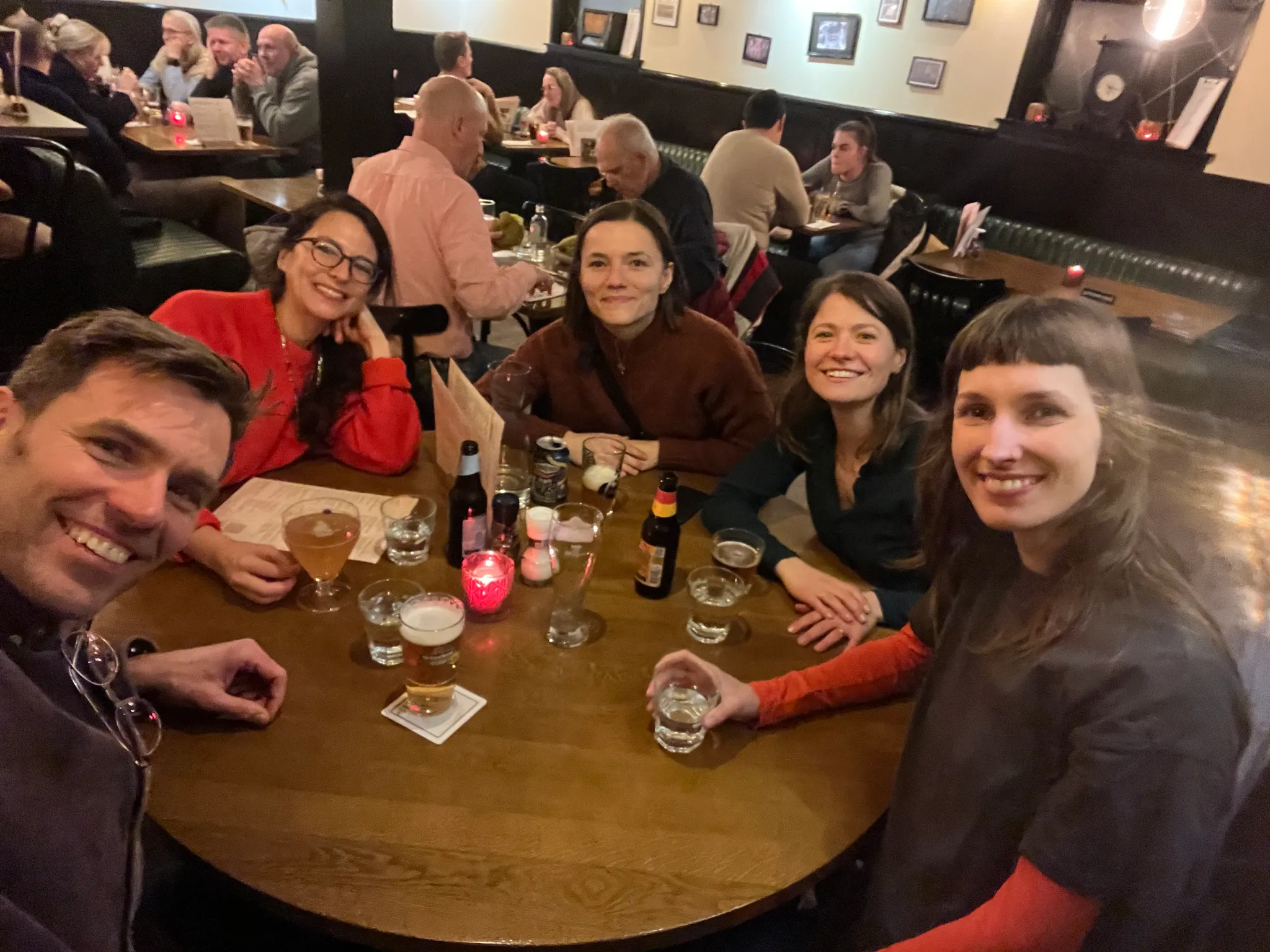
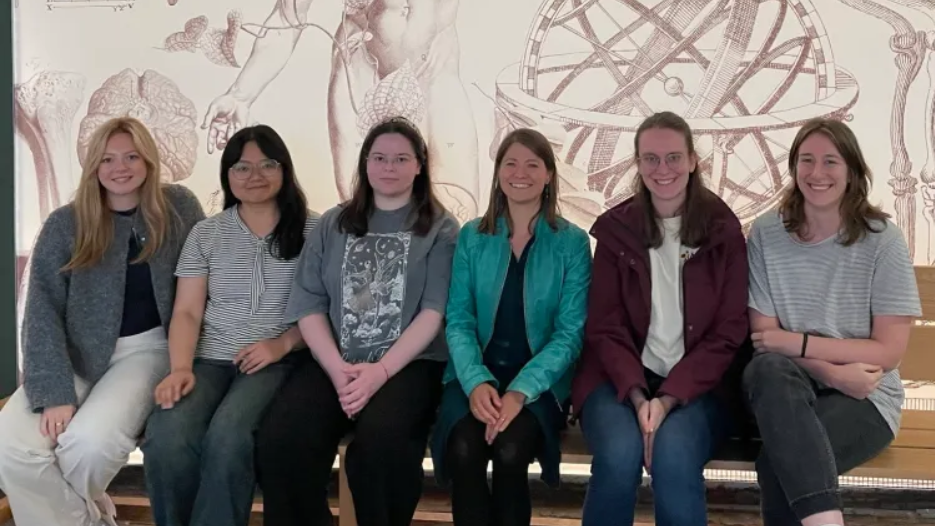
As 2025 comes to a close, here is a short review of what we’ve been up to. This time written collaboratively as a lab! 

See previous years: 2021 in review2022 in review2023 in review, 2024 in review  

In the past year, … 

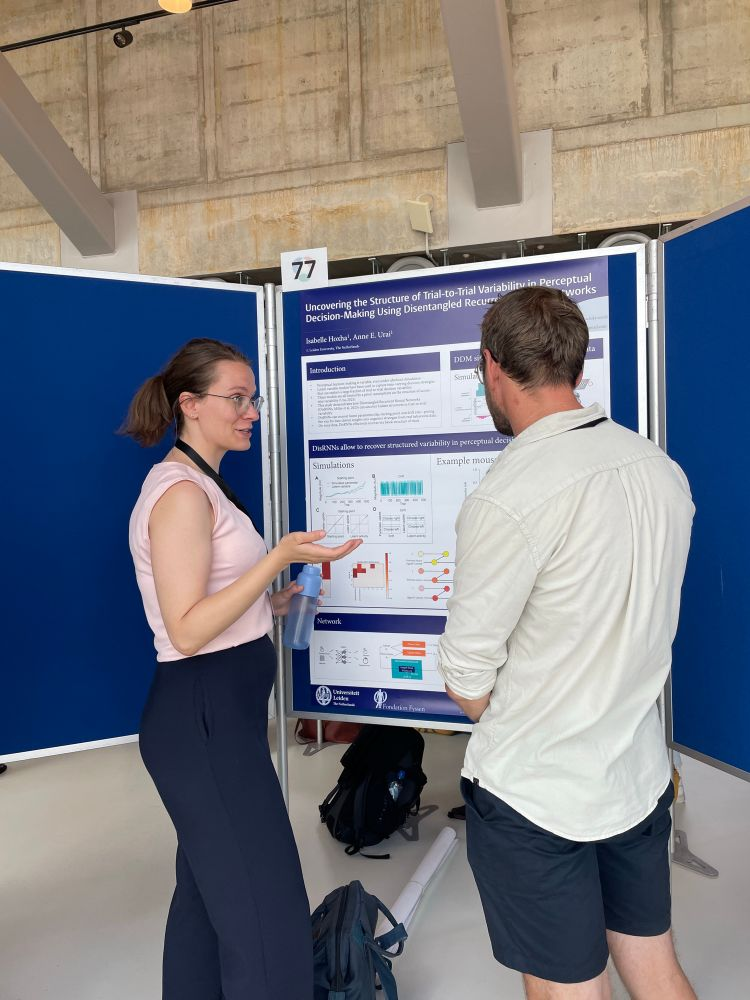
  • Isabelle joined the lab and has been exploring the use of disentangled recurrent neural networks to decompose decision strategies in a data-driven way. She also has won the CogPsy department’s wildcard prize for her role as a young investigator and team scientist! 

we preprinted and published several papers that have been in the works for the past several years: 

  • the International Brain Laboratory published two of its flagship papers, including a large and well-curated dataset of neural activity across the mouse brain. This got plenty of (international) press attention, including a nice interview showcasing how the lab uses these IBL data. 
  • Fenying published her first preprint, describing how ageing affects single-neuron variability across the mouse brain. This paper was nominated by the Cognitive Psychology Unit as the ‘best PhD paper of the year’ award! 
  • Philippa published her postdoc’s first preprint, showing how a double-well dynamical systems model can explain fluctuations in engagement state during decision-making. This started a fun and very informative collaboration with Jorge Mejias at UvA. 

we connected with colleagues locally, nationally and internationally: 

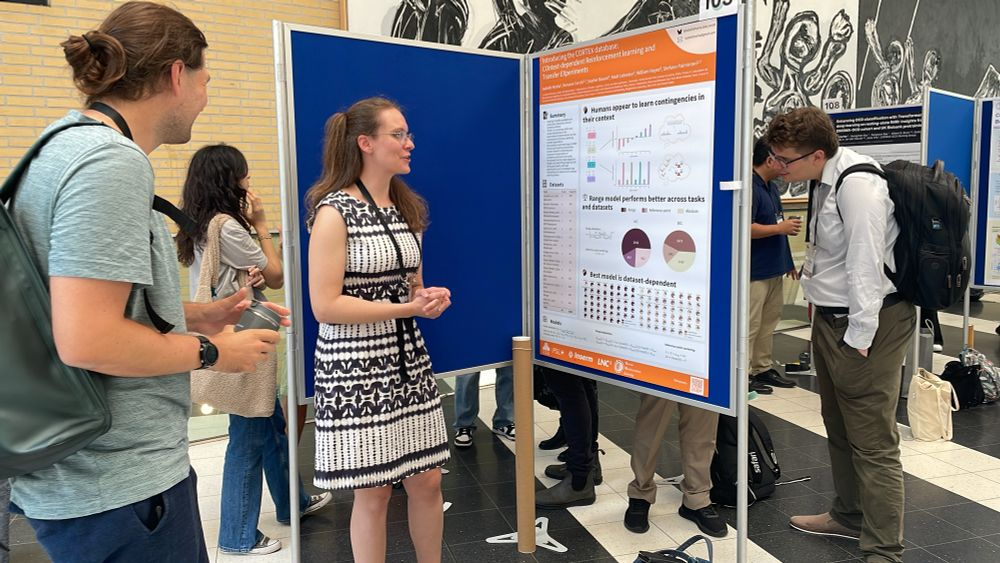
  • we attended CCN in Amsterdam, where we met up with many old and new friends and collaborators 
  • Philippa gave her first invited conference talk at Trieste Encounters in Cognitive Sciences 
  • we hosted visiting PhD students Jade Duffy and Emily Stirling in Leiden. 
  • we enjoyed continued CO2 (cognition x computation) joint lab meetings in Leiden, and a fun joint lab meeting with several groups at UvA. 

we experimented with different ways of doing science: 

  • we did two successful writing weeks together, spending several days focused on writing grants, papers, conference abstracts and proposals. 
  • we launched a collaborative lab project (nickname ‘hivemind’), around which we gathered for a week, brainstorming ideas and intensely coding. We worked on replicating the findings of Findling et al. (2025) on human data previously collected in the lab. It was a fun and productive break for our projects, and we are already excited for next year! 

next to the CoCoSys lab, Anne has been active in the broader academic community. She… 

  • became the vice-chair of the Young Academy Leiden 
  • joined multiple strikes and protests against the budget cuts to higher education in NL. 

we read, listened, watched and experienced exciting things: 

  • (Isabelle’s favorite books of the year, in no specific order):  
    • Tiny Experiments – Anne-Laure Le Cunff: defy your limiting beliefs by designing experiments in your life, following the scientific method 
    • Work Clean – Dan Charnas: building inspiration from the kitchens of the best restaurants in the world to organise your work 
    • Research Data Visualization and Scientific Graphics – Martins Zaumanis: one book of a very enjoyable series about skills to have in research. All the series is worth a read! 
    • Seven Brief Lessons in Physics – Carlo Rovelli: opening the mysteries of how our world is built. Potential for great bedtime stories 
    • Small Country – Gaël Faye: a novel inspired by the author’s life events, describing the situation in Burundi at the time of the Rwandan genocide in the 90’s. A heavy read (emotionally), but beautifully written. 
  • Anne’s favorites this year: fairly recognized podcast, Elusive cures by Nicole Rust, The cloudspotters guide, Free by Lea Ypi, Monk & robot by Becky Chambers. 
  • Philippa’s podcast recs: Brain Inspired, Fela Kuti: Fear No Man 
  • We played “Publish or Perish”, it definitely tested our ability to defend crazy ideas and build bridges. We also played “Non-sense”. 
  • Philippa represented the Netherlands at the European Opens Touch Rugby Cup 

In the coming year, we look forward to 

  • wishing Philippa all the best in her new position at UCL – we will miss you! 
  • welcoming Magdalena Sabat, who will start a project on social tipping points together with Anne and Jan Willem Bolderdijk at UvA.  
  • continuing to learn more about leadership, and experiment with fun ways to work together as a lab.

Reflections on the ‘Science for Social Good’ Satellite Event at CCN 2025

by Georgia Turner

The day before the CCN 2025 conference kicked off in Amsterdam, attendees from career stages ranging from pre-PhD students to keynote speakers gathered together for an event focused on ‘Science for Social Good’. The three-hour session covered big-picture reflections on the role of scientists in society, as well as practical tips like how to switch research topics or start a non-profit. But across these varied topics, one thread ran through every discussion: Can we make contribution to social good not just an accepted, but integral, part of our lives as scientists? 

Continue reading “Reflections on the ‘Science for Social Good’ Satellite Event at CCN 2025”

Communicating Climate Psychology: creative student projects

For the first iteration of the new course Psychology of the Climate Crisis, students worked on creative projects to communicate insights they learned to a broader public. Find their creative contributions below!

Panel discussion: ethics of animal research

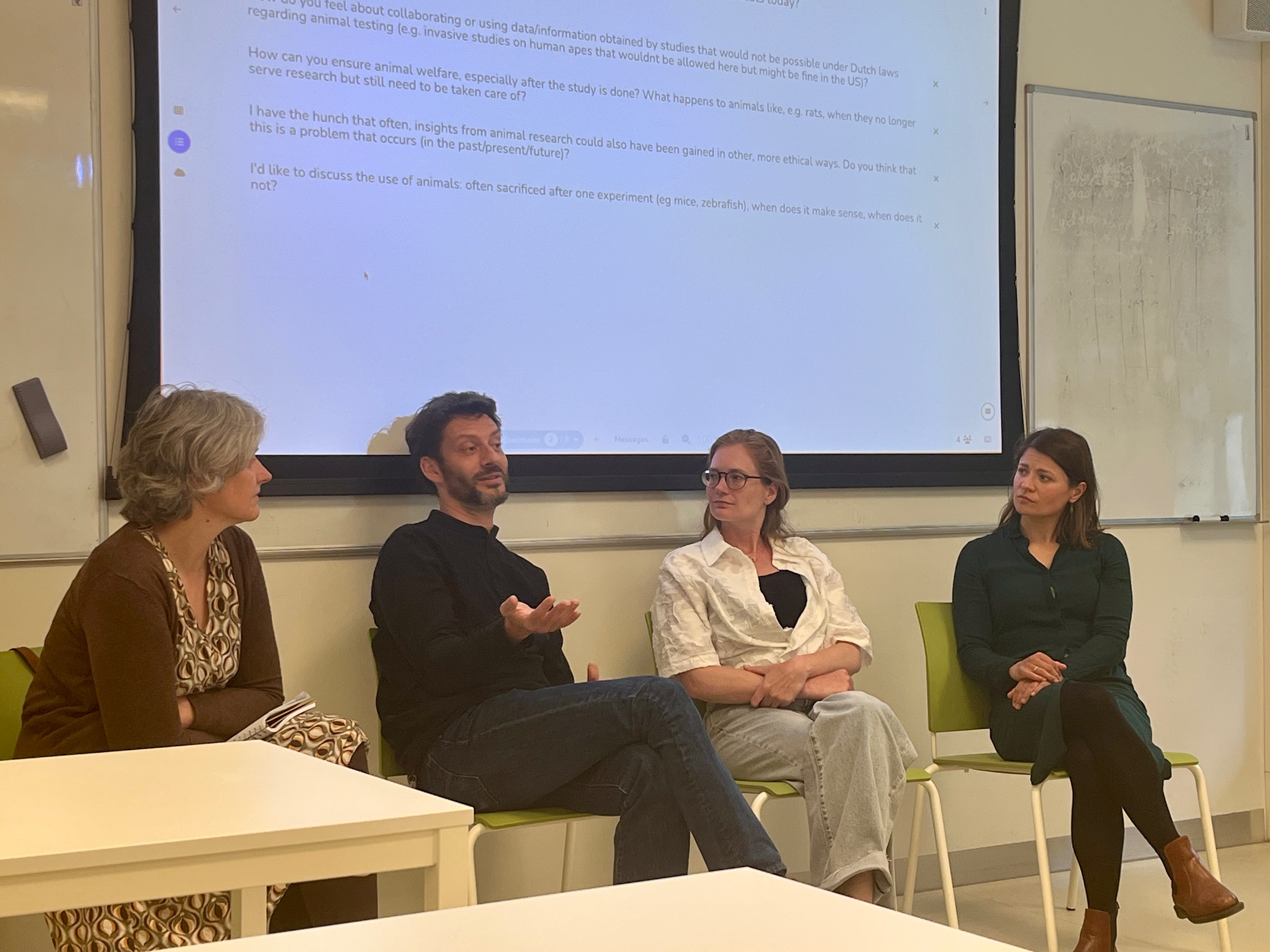
With panelists Karline Janmaat, Christian Tudorache, Michelle Spierings and Anne Urai, and with Tonko Zijlstra as a moderator, we had an interesting and stimulating discussion about the ethics of animal research. With expertise from ethology to behavioral biology and neuroscience, the discussion touched on issues of research culture, institutional and legal frameworks for animal studies, the broader use of animals in society and the 3 Rs in animal research.

Continue reading “Panel discussion: ethics of animal research”

Scientists for social good: 2025 satellite event

We live in times when public trust in science is under threat, misinformation is rife, AI ethics are of increasing concern and climate change is increasingly affecting communities worldwide. How do scientists see ourselves and our role in this world, and can we use our skills for social good? This session will explore ways to to extend the impact of our scientific work beyond our laboratories and models, and will critically evaluate how to fulfil our responsibility as scientists during times of significant social and technological change. Join us for a satellite event at CCN 2025 in Amsterdam.

Continue reading “Scientists for social good: 2025 satellite event”

Erasmus+ Grant for Philippa to visit KU Leuven

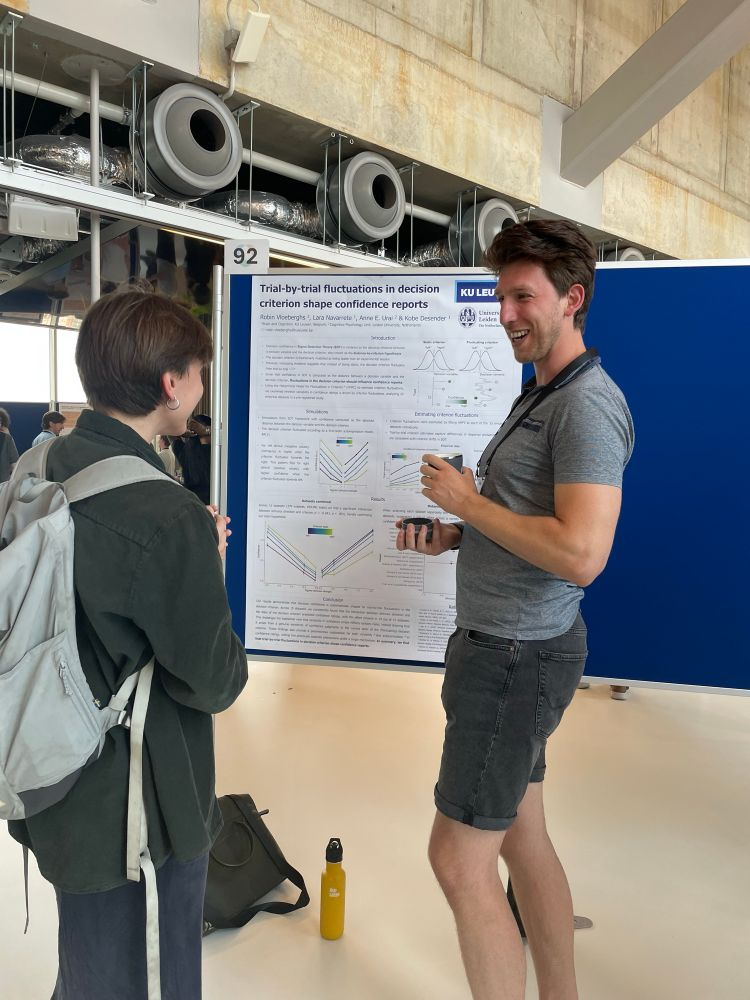
Philippa has been awarded an Erasmus+ travel grant to visit KU Leuven for two weeks in May. She will work in the Desender Lab with Kobe Desender and Robin Vloeberghs to apply the Hierarchical Model for Fluctuations in Criterion. She will use the model to find out how decision-making biases change over the lifespan, and how criterion fluctuations relate to changes in pupil-linked arousal.

From: Vloebergs R, Urai AE, Desender K, Linderman S (2024) A Bayesian Hierarchical Model of Trial-to-Trial Fluctuations in Decision Criterion. bioRxiv, 605869

Activism and Science: eLife interview

Two years after our article ‘Doughnut Academia’, Anne and Clare have posted a new preprint to reflect on where these ideas have brought them – and providing guidelines for others to host their own workshops. See the preprint here https://osf.io/preprints/osf/um47d_v1, and a follow-up interview with eLife here: https://elifesciences.org/interviews/1a08d974/anne-urai-and-clare-kelly