Two years after our article ‘Doughnut Academia’, Anne and Clare have posted a new preprint to reflect on where these ideas have brought them – and providing guidelines for others to host their own workshops. See the preprint here https://osf.io/preprints/osf/um47d_v1, and a follow-up interview with eLife here: https://elifesciences.org/interviews/1a08d974/anne-urai-and-clare-kelly
From data to code and figures
Scientific figures are essential for communicating your research effectively. This guide walks you through the process from raw data to publication-ready figures; and helps separate different phases of the research as we most often carry them out in the lab.
Input gathered from a CoCoSys lab meeting in March 2025.
HMM Python package comparison
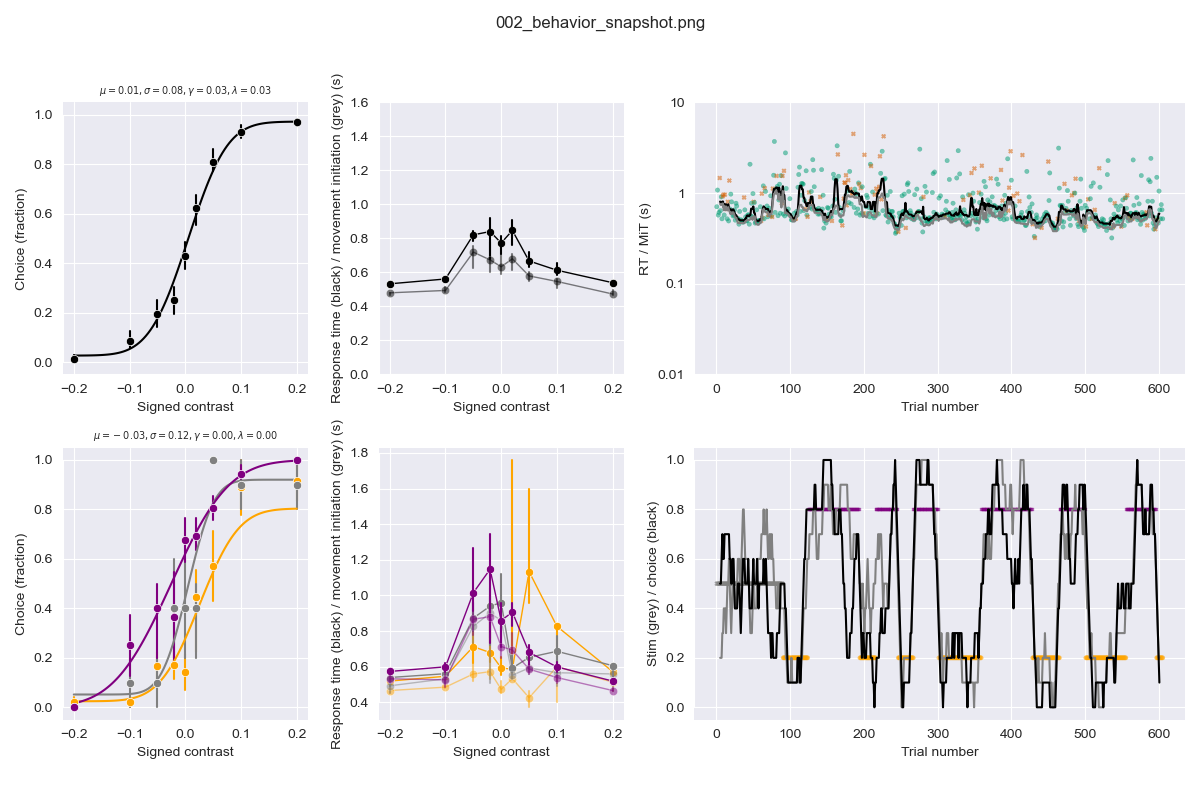
At the beginning of my postdoc, I searched for and compared Python packages for fitting hidden Markov models. As this may be useful to other HMM fans, I am sharing the resulting table, which non-comprehensively covers various features of IOHMM and Dynamax.
Continue reading “HMM Python package comparison”2024 in review
Each year, I quickly review science, lab, life and everything. See 2021 in review, 2022 in review, 2023 in review.

NWO SSH-XS grant to study early warning signals of behavioral disengagement
We have been awarded a grant from the Dutch Research Organisation NWO, to. See the announcement and other projects here.

Of mice and (wo)men – or: how I learned to read spikes
By Sonja Förster
What are ephys alignments – and why would you do them?
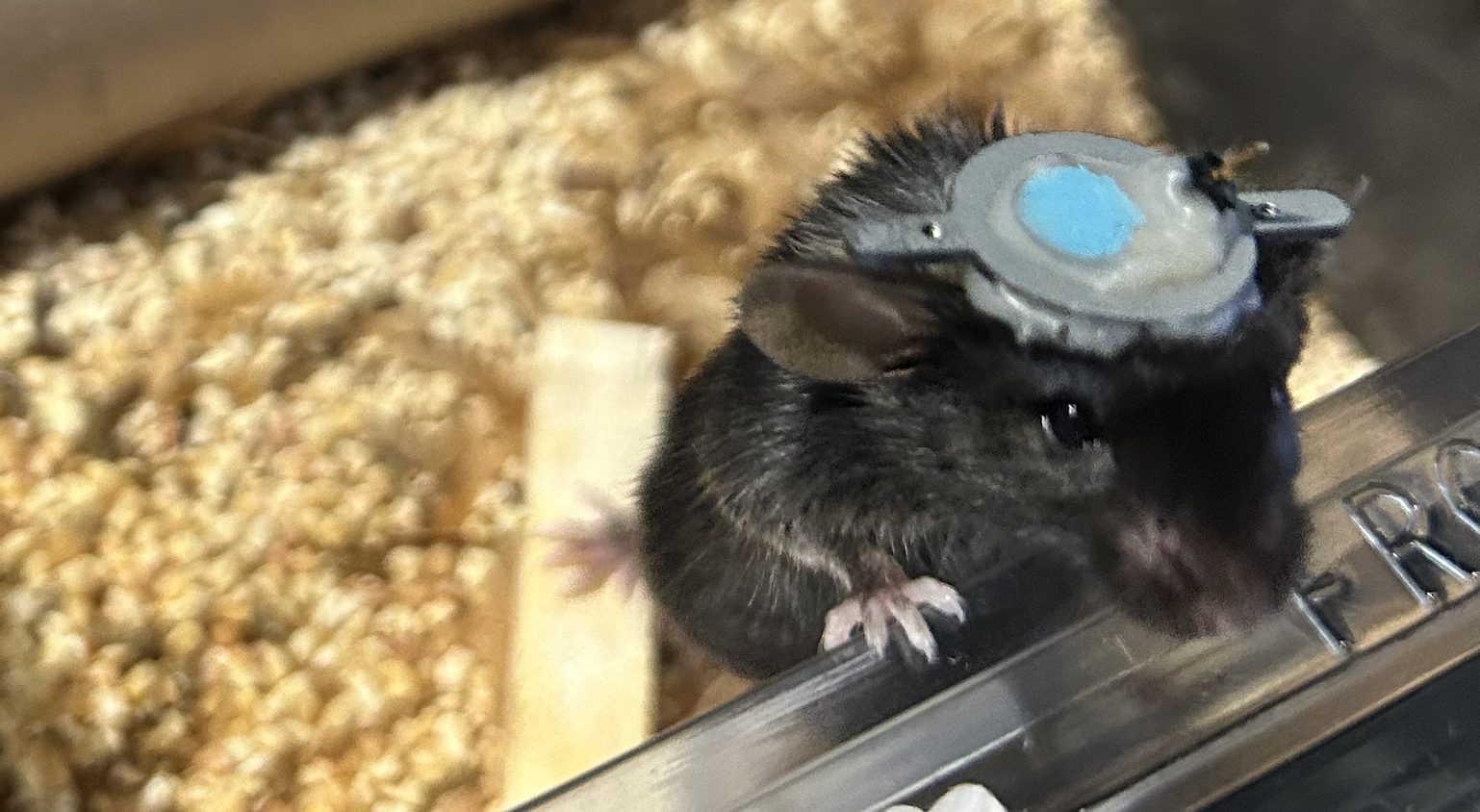
Ephys alignments, or histology – electrophysiology alignments in full, intend to align electrophysiology features of a neural recording to an anatomical histology reference (here, the Allen adult mouse brain atlas) to allow for reasonable alignment of the recording channels along the probe trajectory. This is important since mouse brains might be smaller or larger, or slightly differ in some structural landmarks. And it may be especially relevant for recordings from a Neuropixels probe (or other probes that record across multiple brain regions). Those ephys alignments are therefore a crucial prerequisite to ensure that subsequent analyses compare apples to apples, or, let’s say, spike count variability in a given region of one mouse to the spike count variability in exactly that same region in another mouse.
Continue reading “Of mice and (wo)men – or: how I learned to read spikes”A GLM-HMM deep dive
By Camilla Ucheoma Enwereuzor
As part of my MSc internship in the lab, I have spent the last couple of months diving into a paper by Ashwood et al. (2022), who investigated how observers switch between different strategies for perceptual decision-making over the course of long testing sessions. According to previous accounts (e.g., Wichmann & Hill, 2001), subjects maintain one main strategy during cognitive tasks, and any lapses (i.e., errors despite strong sensory evidence) arise independently of one another and of the time course of the experimental session. However, Ashwood et al. suggest that this view is not correct. Using a modelling approach based on Hidden Markov Models (HMMs), the authors found that mice switch between multiple strategies, or hidden “states”, during perceptual decision-making sessions (Figure 1). Importantly, the Markovian component of this approach implies that states are not independent of one another, but rather depend only on the state from the preceding trial, and can persist for many trials in a row. Let us look at how this modelling approach works in more detail.

Figure 1. Reprinted from Figure 1a-b of Histed and O’Rawe (2022). a. Schematic representation of the task for the IBL et al. (2021) mouse data. Mice turned a wheel to indicate whether a sinusoidal grating appeared on the left or right side of the screen. b. Recovered states according to a 3-state GLM-HMM: mice switched between an engaged state where they relied heavily on sensory evidence, to less engaged states that showed left or right biases.
2023 in review
Another review of the year (here is 2022 and 2021), this time a bit late.
In 2023, I…
- welcomed the lab’s first postdoc, Philippa Johnson;
- started co-supervising Sarah Kusch, who will investigate pro-environmental behavior and cognitive effort at Ghent University;
- was proud to see our lab’s projects presented at Cognitive Computational Neuroscience in Oxford, and NVP in Egmond aan Zee (see here, here and here);
- published my opinion piece on academia & the climate crisis, and gave several workshops on the topic;
- co-authored several preprints coming out of my postdoc time in the International Brain Laboratory;
- applied for the Young Academy Leiden again, and was accepted this time;
- took a course on mentoring organised at Princeton, and am still meeting regularly with a great mentoring circle;
- taught courses on cognitive modelling, cognitive neuroscience and social dynamics;
- read eclectically on systems neuroscience, mathematical psychology, dynamical systems in cognitive science, critical transitions, and social movements;
- saw my beloved science Twitter collapse, and am attempting a fresh start on BlueSky;
- participated in two hiring committees for the first time (turns out making good policies on such things is quite hard);
- co-wrote a letter to Leiden University’s board, calling for an end to collaborations with the fossil fuel industry;
- brought my toddler to a scientific workshop for the first time, and struggled to find a good balance between research trips and family life;
- after losing my dad, learned the hard way how exhausting it is to grieve; that the administration after someone dies is a part-time job in and of itself; what a privilege it has been to have a mentor from another scientific field; and how lucky I am to have such supportive friends, family, lab members and colleagues.
Here’s to a 2024 with more mental calm, enough time to spend with the people most important to me, several exciting papers to write, insight and wisdom.
NVP @ Egmond aan Zee
The lab attended the NVP winter conference on Brain and Cognition in beautiful Egmond aan Zee. Philippa, Fenying, Sonja, Adrian and Anne presented posters on their work. Anne also gave a workshop on climate action in academia (more info and slides here).


Anne joins Young Academy Leiden
Today, I was inaugurated as a member of the Young Academy Leiden, a group of early-career academics who think and work together on questions of research policy, outreach and interdisciplinary collaboration.

The theme of the inauguration was ‘Engagement’, and each incoming member made a short video on the topic. See below for my contribution.
Continue reading “Anne joins Young Academy Leiden” CoCoSys lab