By Fenying Zang
When I arrived at the Computational and Cognitive Neuroscience Summer School in Suzhou, I felt both excited and curious. My PhD project has largely focused on analysing neural recordings and examining how neural activity varies across trials. While this empirical perspective has allowed me to identify patterns in data, I had become increasingly interested in how theoretical and computational approaches might help explain the phenomena behind those patterns. Exploring this direction felt particularly important as I entered the final year of my PhD and began to think more carefully about how I wanted to develop as a researcher. I hoped that the summer school would bring me closer to theoretical neuroscience and allow me to meet researchers who approached the brain using very different questions and methods.
A few days into the course, my notebook was already filled with unfamiliar equations, sketches of models, and a growing list of questions. During one lecture, we might discuss how activity evolves in a recurrent neural network; during the next break, the conversation could shift to experimental recordings or the geometry of neural population activity. It was exciting, occasionally overwhelming, and very different from the way I usually approached neuroscience.
From Population Activity to Computational Modelling
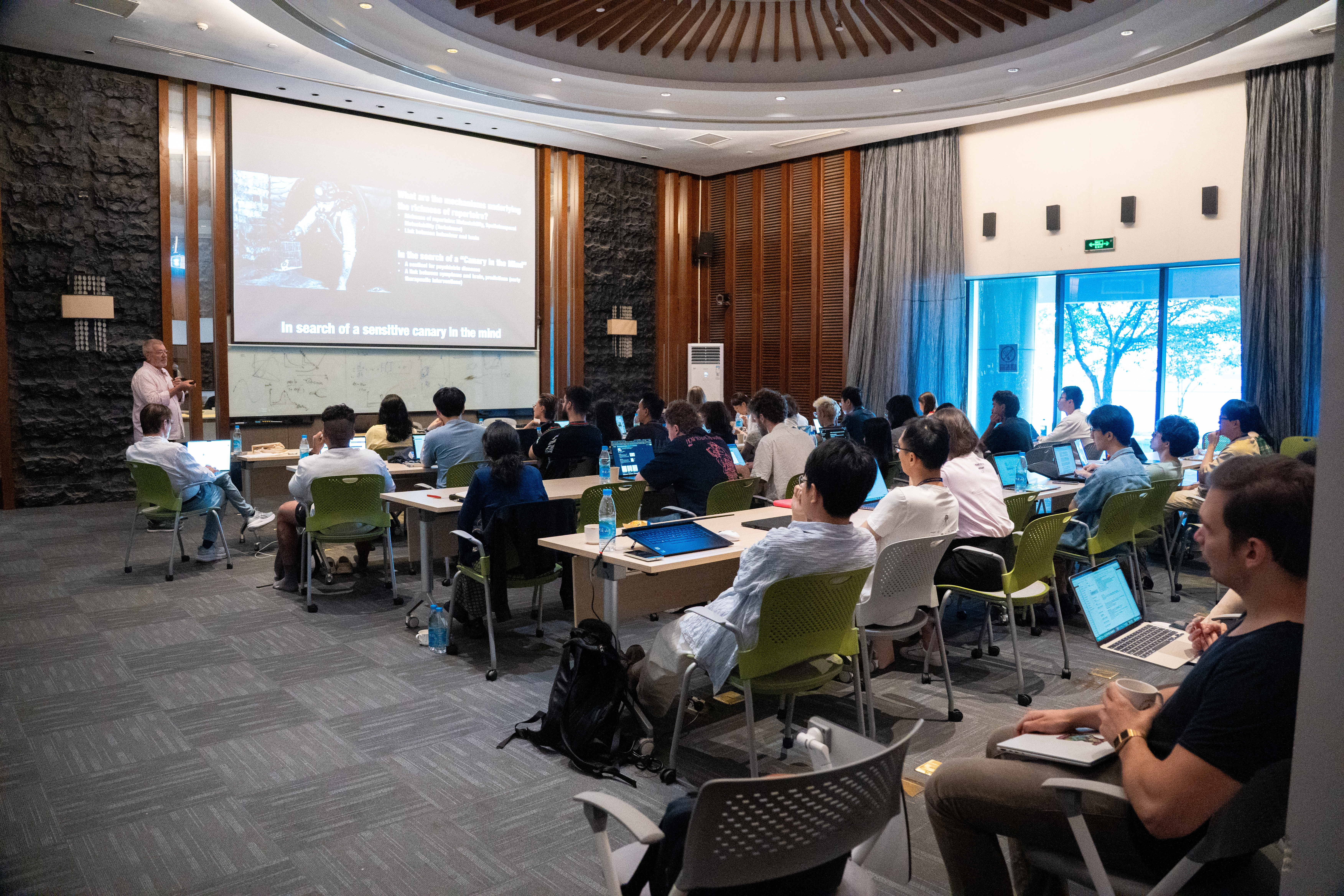
The summer school covered a broad range of topics, combining foundational concepts in computational neuroscience with recent methods, practical tools, and examples from current research.
For my own research, two themes were especially useful. The first was population-level analysis. Lectures on dimensionality reduction introduced ways to study recordings from many neurons through shared patterns and lower-dimensional structure, rather than only neuron by neuron. The concept of neural manifolds offered a geometric perspective on this structure. Together, these lectures gave me a different way of thinking about large-scale neural recordings.
The second theme was about computational modelling. Before the summer school, I had encountered several modelling approaches, but they remained somewhat separate in my understanding. Seeing models that focused on different levels—from local circuits to interactions among brain regions—helped me understand more clearly what kinds of questions different models are designed to address.
What I found most useful was seeing data analysis and modelling side by side. Data analysis can identify and characterise patterns in neural recordings, while modelling can test whether a particular set of assumptions is sufficient to reproduce them. Successfully reproducing a pattern does not establish the true biological mechanism, but comparing the model with the data can reveal where it succeeds and where it falls short. I explored this relationship in my mini-project.
Putting the Ideas into Practice
A key part of the summer school was the opportunity to apply what we had learned to our own research. For my mini-project, I explored whether a simple excitatory–inhibitory mean-field model could reproduce age-related patterns in firing rate and trial-to-trial neural variability observed in my data. The model was intended as an initial local building block for a future multi-region model.
The initial model produced the increase in mean activity but did not readily reproduce the reduction in variability, showing that these two empirical patterns did not automatically emerge together within this model. This mismatch led me to reconsider the model’s assumptions and explore alternative circuit mechanisms that might account for variability quenching. I am continuing to develop this project after the summer school. It also showed me that failure to reproduce an observation can be informative about what a model may be missing.
People and Conversations
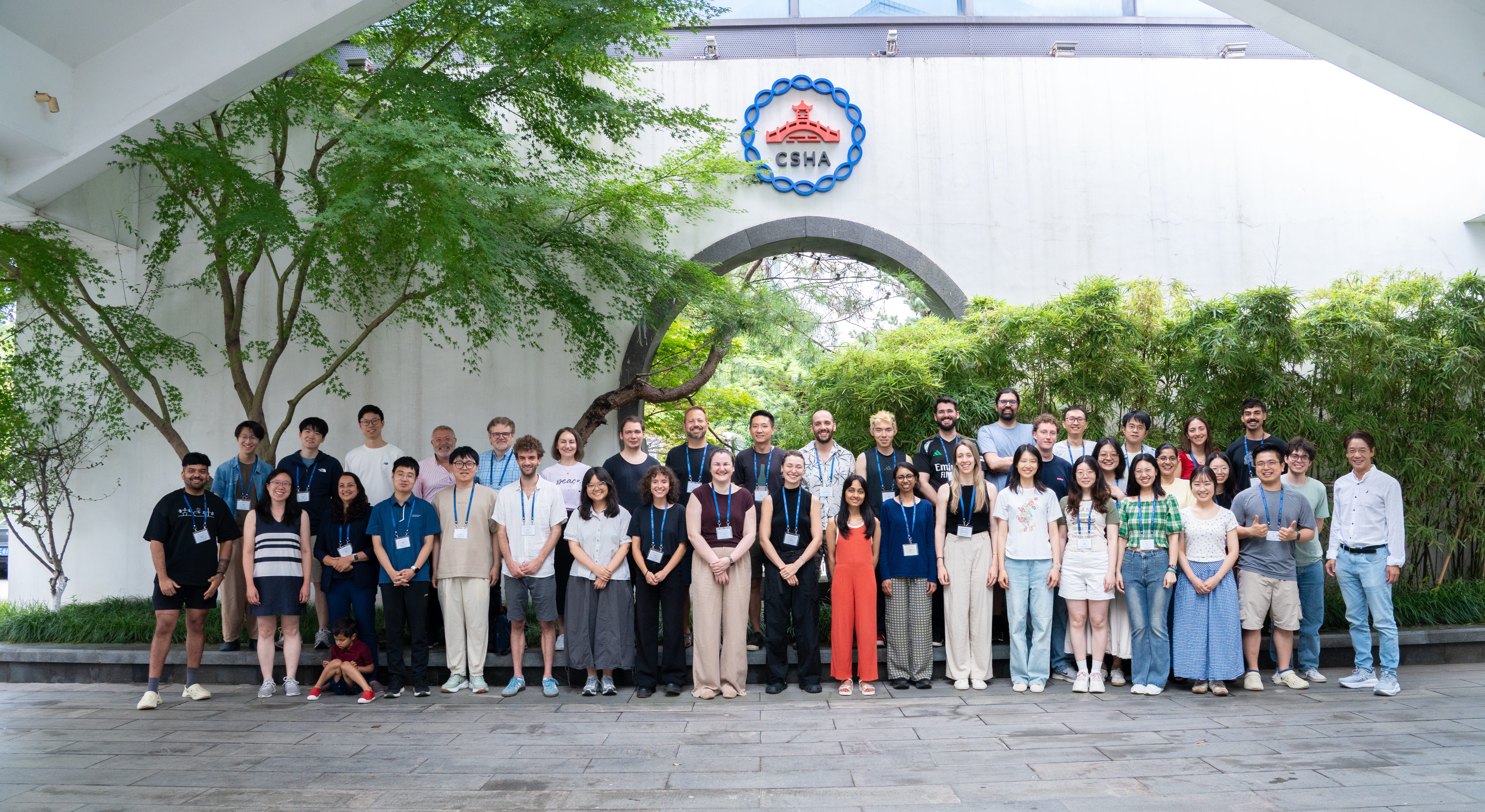
One of the most memorable aspects of the summer school was its open and welcoming atmosphere. The faculty members were friendly and approachable, and we could discuss ideas with them during breaks, over meals, or whenever an interesting question arose. It was especially exciting when a casual conversation gradually developed into a new research idea. The teaching assistants were also always available for discussion, practical advice, and support with our projects. Equally inspiring were the other participants, who came from different research areas, countries, and cultural backgrounds. Almost every conversation offered something new to learn. Despite our different experiences, there were many moments when our ideas and experiences resonated with one another. We discussed not only our research, but also academic experiences, life abroad, and everyday challenges. This open and equal environment encouraged me to participate more actively in conversations and share more of my thoughts. It became one of the most valuable parts of the experience.
Beyond the Classroom: Exploring Suzhou
Apart from the lectures and research projects, we also had opportunities to explore Suzhou, a city where traditional gardens and historic buildings coexist beautifully with modern architecture.
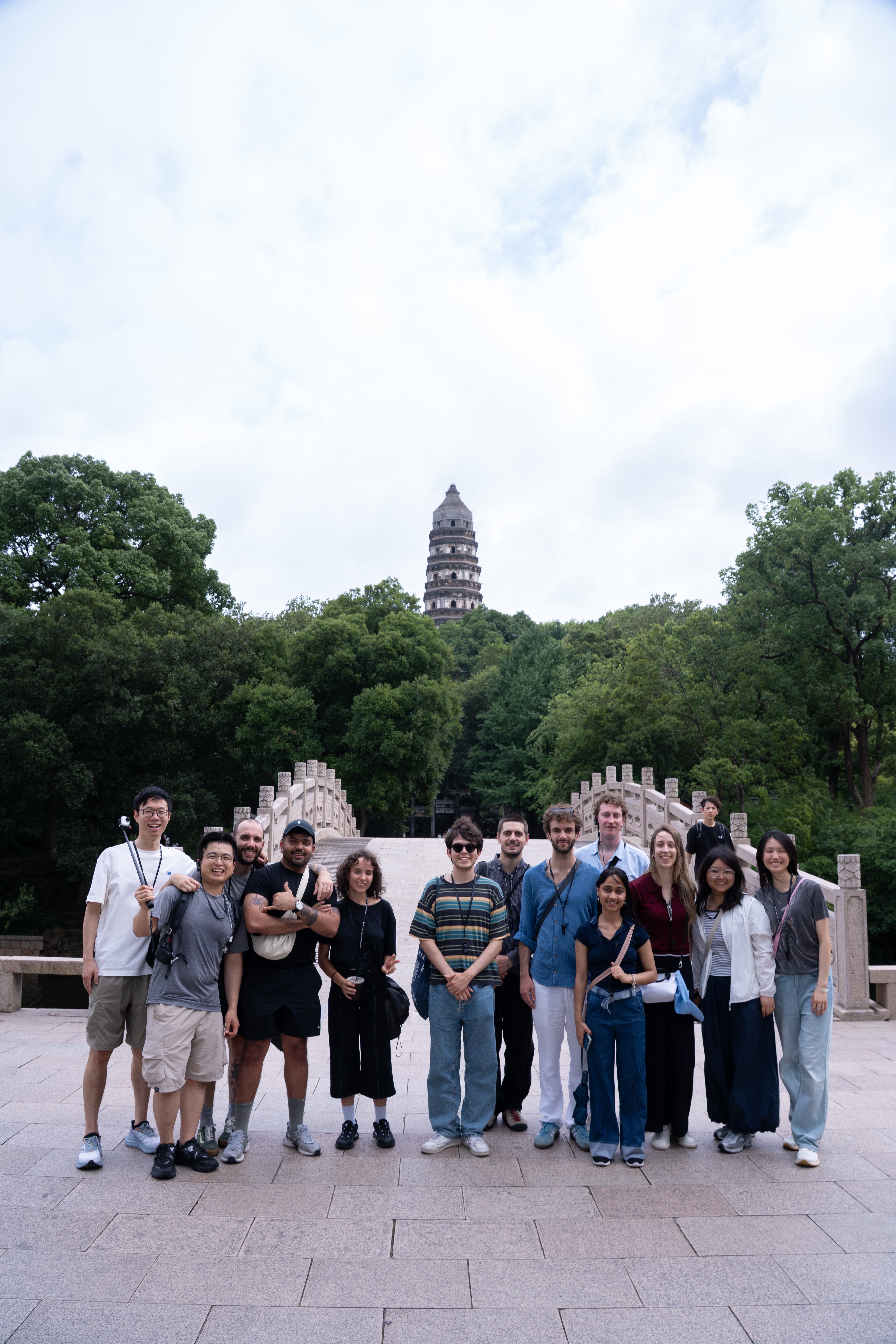
On one particularly hot afternoon, we visited Tiger Hill together. Walking through the greenery, exploring the centuries-old pagoda, and sharing the experience with so many cheerful faces made the trip especially memorable. Surrounded by laughter, I briefly felt as though I were back on a high-school excursion. Later, we attended a performance of Suzhou opera. I was struck by its delicate and moving quality, which offered a very different glimpse into the city’s cultural heritage.
Even the approaching typhoon became part of our shared experience, changing some of our plans and giving us more time to talk indoors. Fortunately, it turned out to be much less frightening than we had expected.
Looking Ahead
The summer school introduced me to many concepts, modelling approaches, and computational tools that I had previously encountered only briefly or not at all. More importantly, it gave me a broader view of the field and helped me see how different theoretical, computational, and experimental approaches can complement one another.
I was also inspired by how the faculty members approached research. Their lectures and discussions showed not only how to use particular methods, but also how to formulate meaningful questions, examine assumptions critically, and develop a coherent research programme over many years. This was especially valuable at a stage when I am beginning to think seriously about the kind of researcher I would like to become and about my next steps after graduation.
I returned with more questions than answers, but also with a clearer sense of one direction I would like to explore further: asking not only where and when neural activity changes, but what circuit or computational mechanisms might account for those changes. I also came away with a clearer appreciation of how much I still have to learn, particularly in mathematics and modelling.
Some of the influence of this experience may not be immediately visible. I expect it to unfold gradually, in the way I frame a future research question, evaluate a model, or decide which direction to take next.
Acknowledgements
I gratefully acknowledge the travel grant provided by the Leiden University Fund (LUF), as well as the financial support from the Cognitive Psychology Unit. I would also like to thank my supervisors Anne Urai and Sander Nieuwenhuis for encouraging and supporting me throughout the application process. I am especially grateful to Jorge Mejias and Francisco Páscoa dos Santos for their guidance and support during my mini-project. Finally, I would like to thank everyone who was part of CCNSS 2026 for making the experience so memorable and rewarding.
 CoCoSys lab